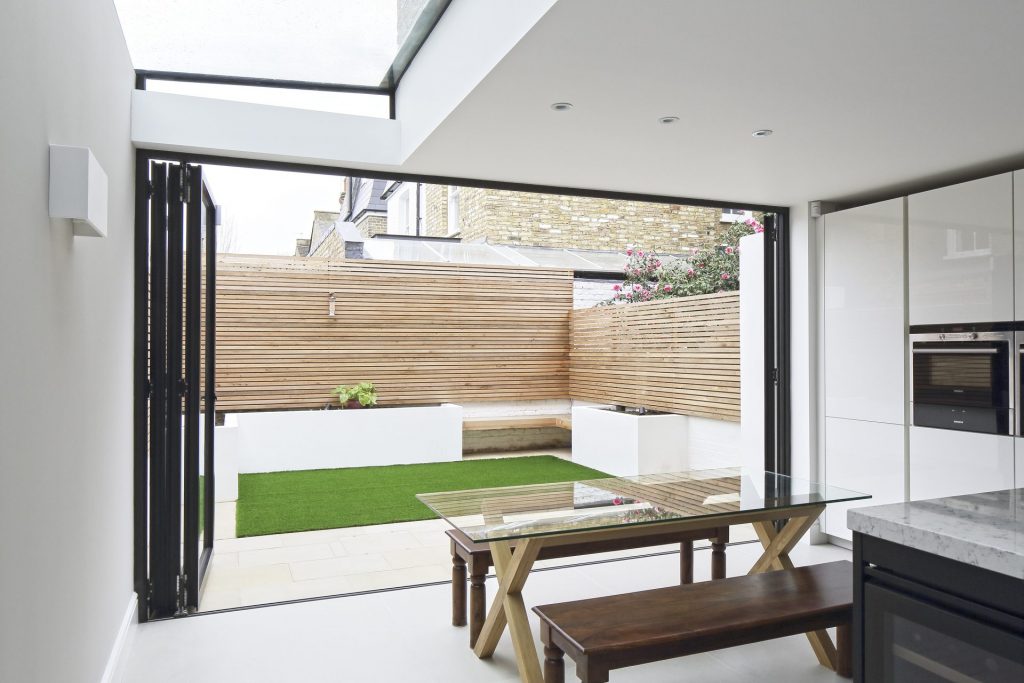


External Space within High End Residential
At high-end residential level external space is constructed with the same discipline as the building itself, formed through structure, build-up, and precise coordination rather than left as landscape alone.
The starting point is always levels. Internal finished floor level and external paving are typically aligned to create a continuous datum, allowing space to read seamlessly from inside to out. Achieving this requires careful control of the threshold. Rather than a simple junction, it becomes a detailed assembly incorporating recessed tracks, linear drainage, and controlled upstands, all working together to maintain a clean visual line while managing moisture and compliance with Part C.
Beyond the façade, the ground plane is often structural. In Fulham, external areas frequently sit above basement accommodation, meaning what appears to be garden or terrace is in fact a roof build-up. The slab is designed with both loading and deflection in mind, supporting paving, planting, and occupancy while maintaining the integrity of the finishes above.
The build-up above this slab is layered and deliberate. Falls are introduced typically in the order of 1:80, to guide water toward defined drainage points. A waterproofing system is then applied followed by protection layers, drainage membranes, and the final surface finish. Each layer performs a specific role, contributing to a robust system.
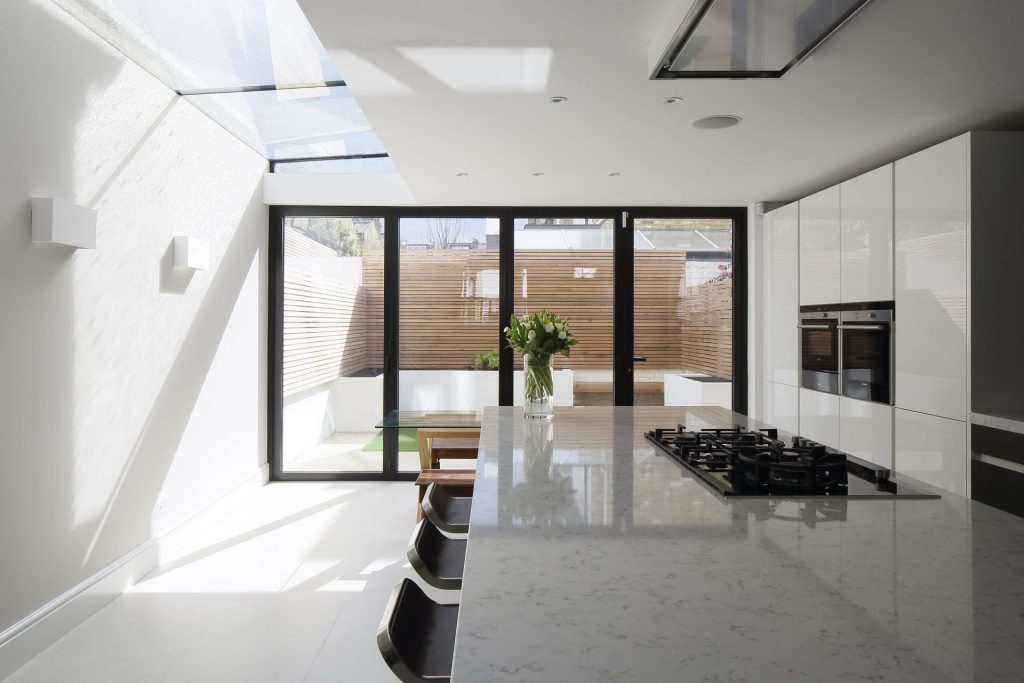
Drainage is integrated from the outset and aligned with Sustainable Drainage Systems principles. In a dense urban setting such as Fulham, managing surface water at source is essential. Rather than directing water immediately to below-ground drainage, the design often allows for attenuation within the build-up itself. Drainage layers beneath paving can temporarily store and slow water movement, while permeable joints and carefully graded falls reduce the rate of runoff.
At threshold level, linear drainage is typically used to intercept water before it reaches the building line. Across the wider surface, falls are coordinated with paving grids so that water movement is controlled but visually imperceptible. The intention is always clarity of space, with the technical resolution sitting just beneath the surface.
Material selection builds on this framework. Porcelain paving is widely used for its dimensional consistency and low water absorption, allowing for tight jointing and a refined finish. Natural stone introduces a different character, with variation in tone and texture, but requires more careful calibration in setting out and long-term maintenance. Where pedestal systems are employed, they introduce flexibility in levelling and allow services and drainage to run beneath, but require precise coordination at membrane level.
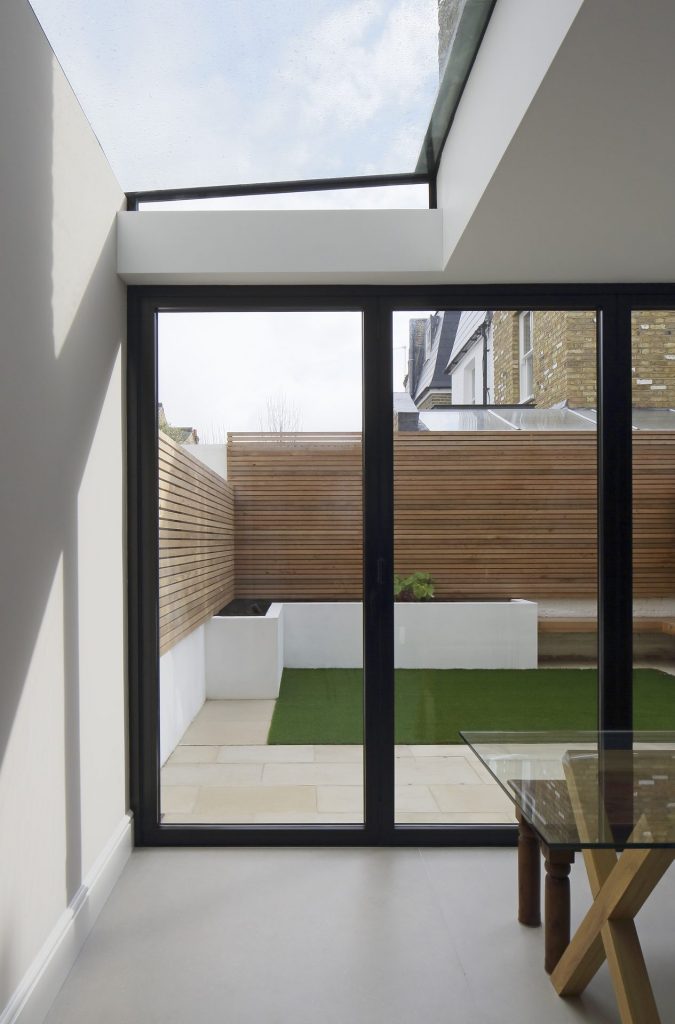
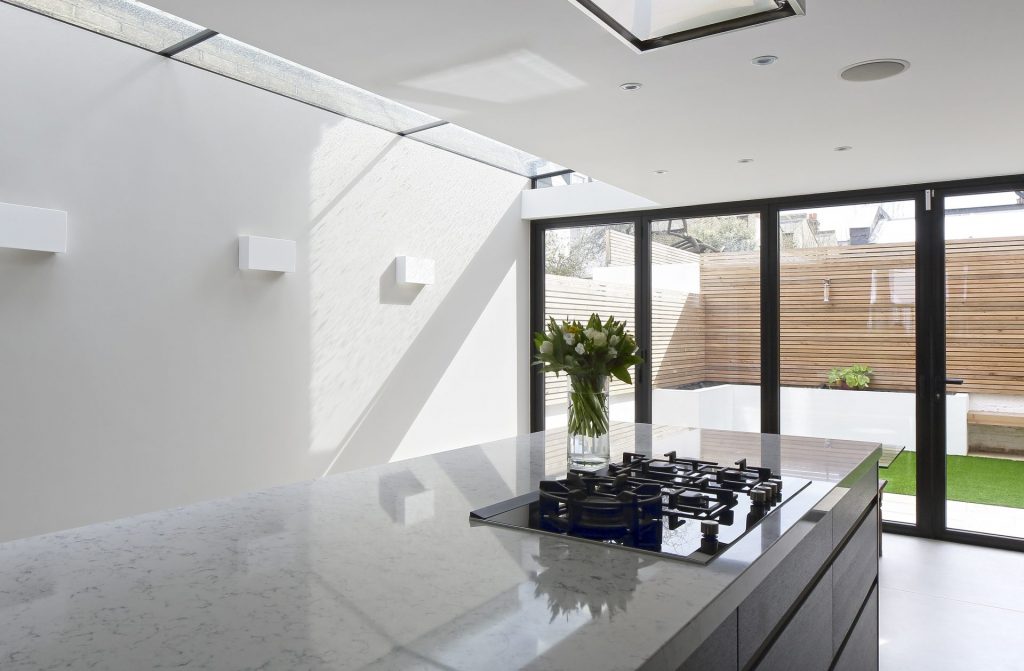
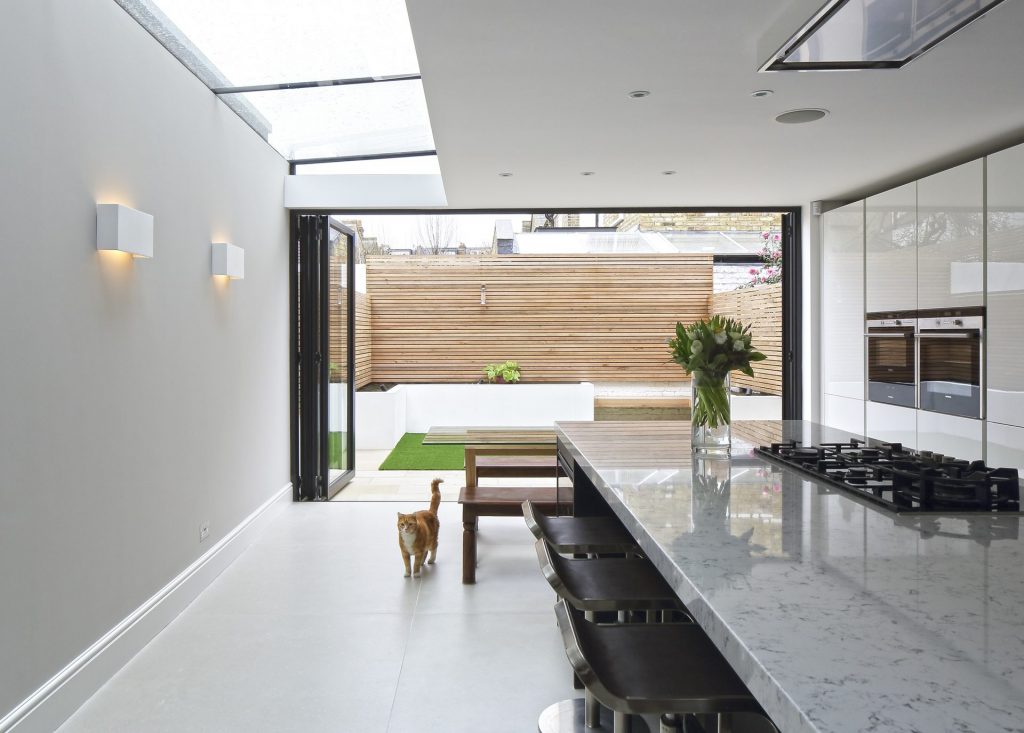
Material selection builds on this framework. Porcelain paving is widely used for its dimensional consistency and low water absorption, allowing for tight jointing and a refined finish. Natural stone introduces a different character, with variation in tone and texture, but requires more careful calibration in setting out and long-term maintenance. Where pedestal systems are employed, they introduce flexibility in levelling and allow services and drainage to run beneath, but require precise coordination at membrane level.
Once the hardstanding is resolved and the primary surface is established, the introduction of vegetation becomes a key consideration. Planters are well favoured and not just decorative additions. They are constructed components, coordinated with the slab, waterproofing, and drainage strategy beneath. Typically formed in masonry or lightweight structural systems, they are lined internally, incorporate root barriers, and are detailed with drainage outlets connected back into the wider system. Build-ups are carefully considered to allow sufficient soil depth for planting while maintaining weight limits and avoiding oversaturation.
Over time, at Shape Architecture, we have developed a consistent approach to these details. Planters are set out in alignment with the paving grid, maintaining a clear geometry across the space. Edges are expressed cleanly. allowing for a sharp transition between hard and soft elements.
These elements are frequently combined with integrated seating. Benches are formed as extensions of the planter structure allowing them to sit comfortably within the same language. This creates moments of occupation within the external space, without introducing loose furniture or disrupting the clarity of the layout.
What emerges from this approach is a series of defined zones within the external space. Hard and soft elements are balanced, but always within a controlled framework. Vegetation provides softness and variation, while the underlying geometry remains precise.