

Bathroom Design Through Built Work
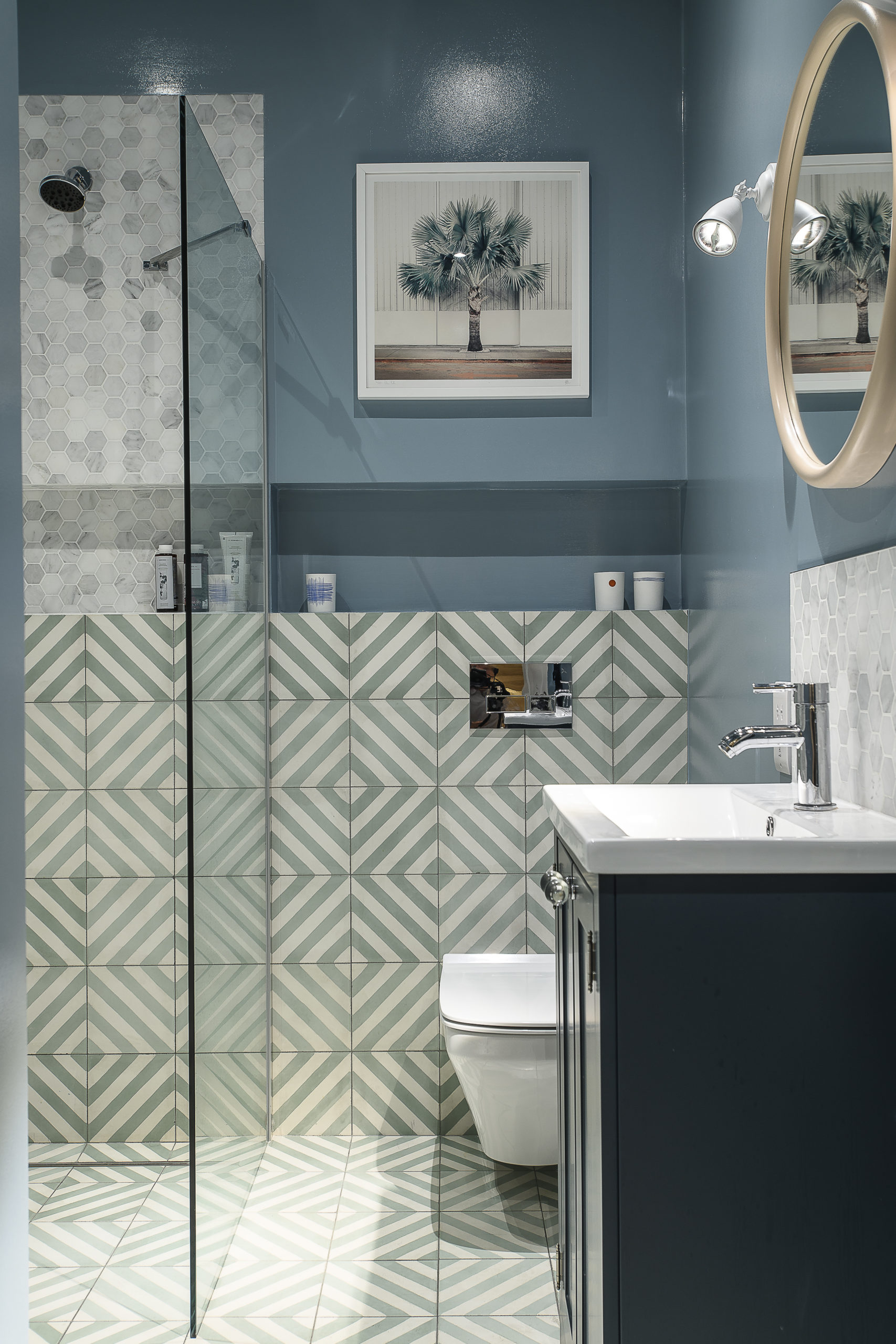
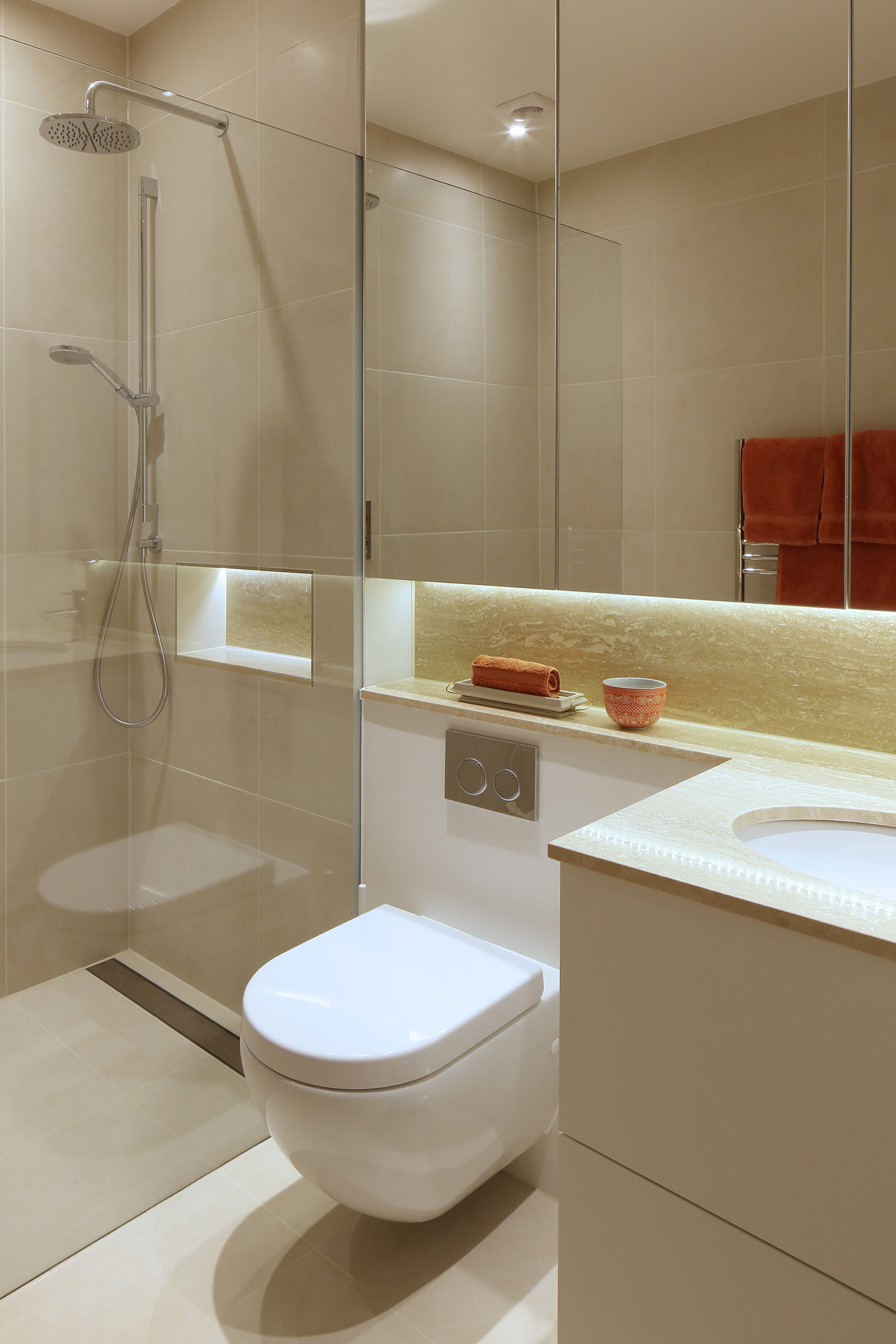
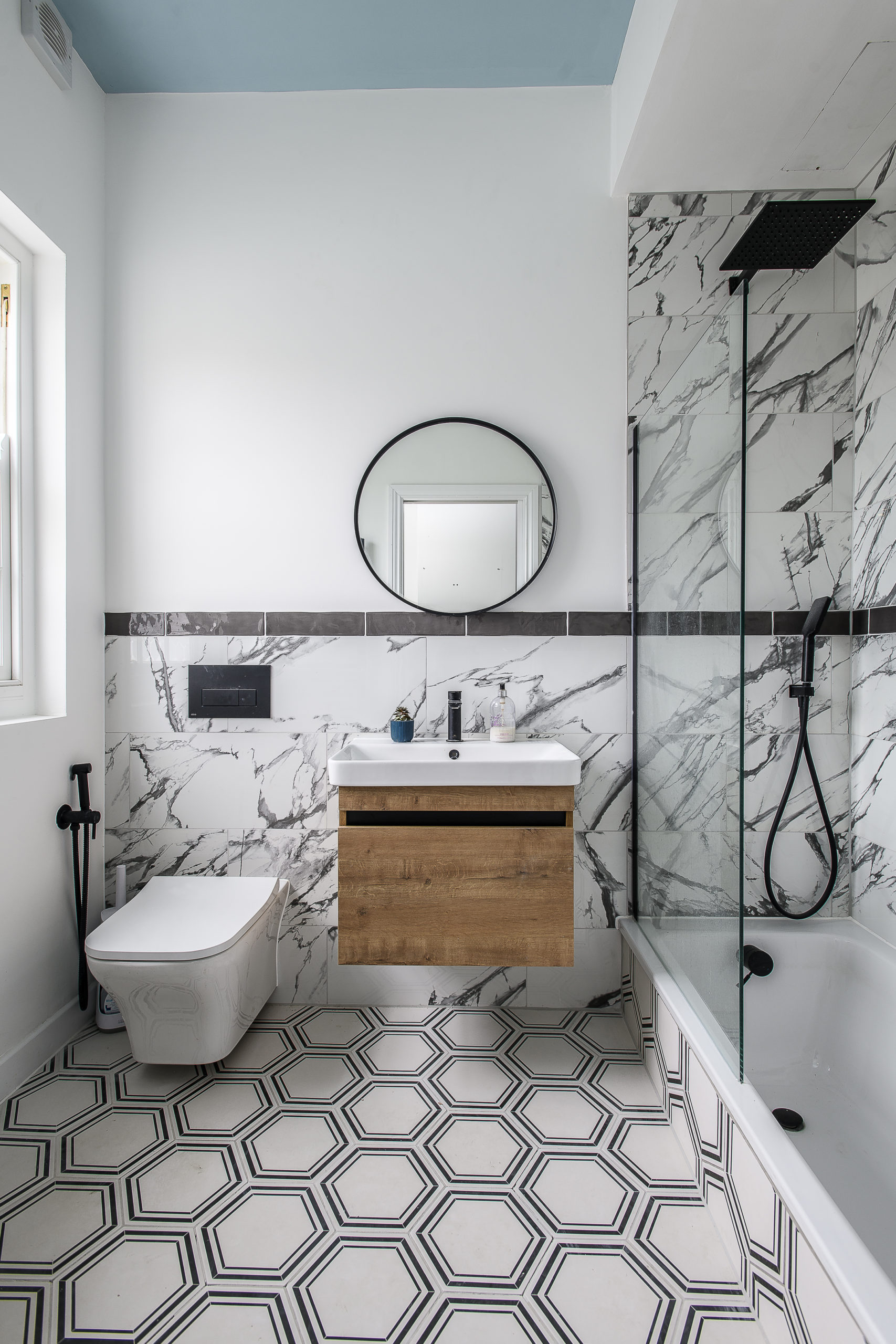
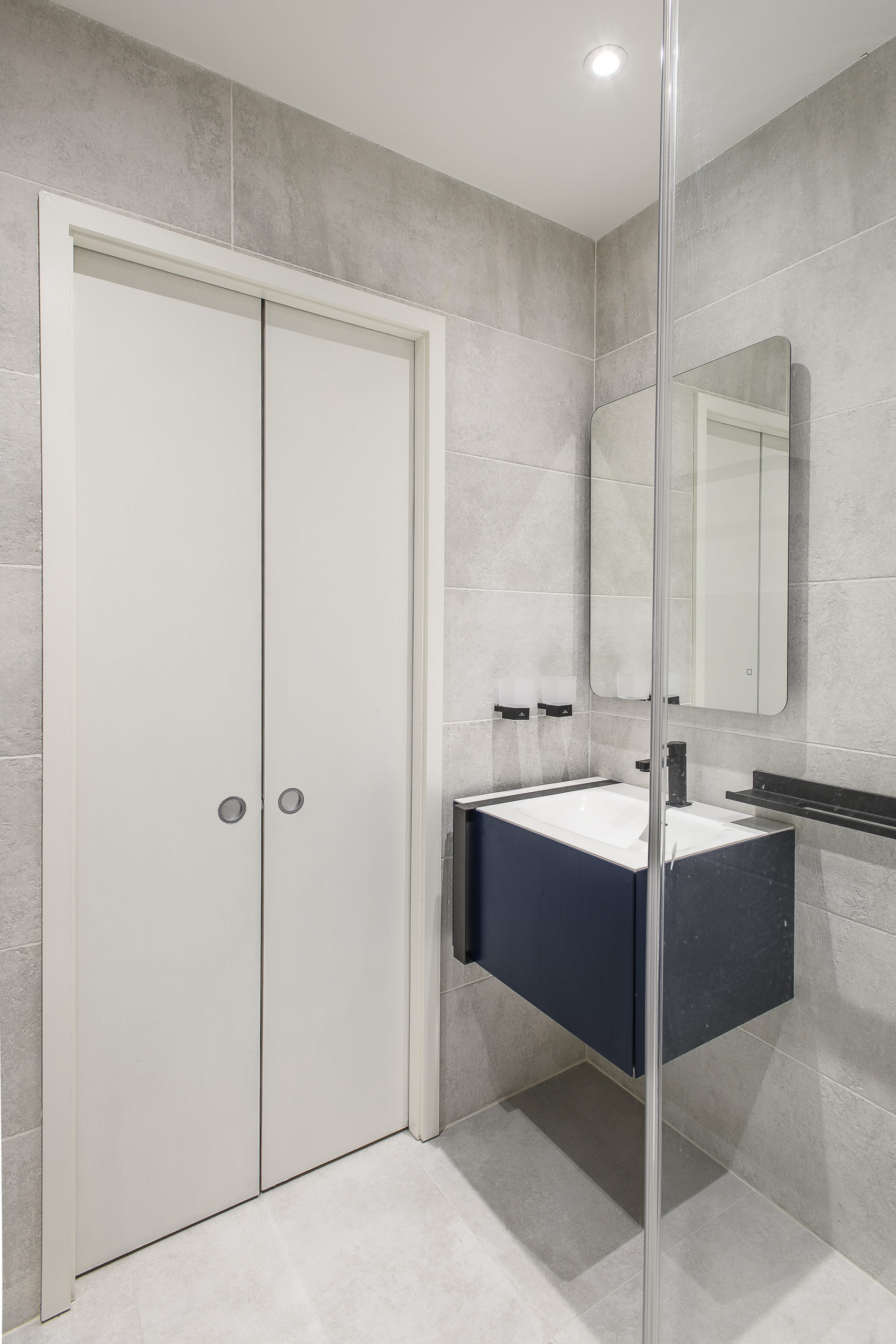
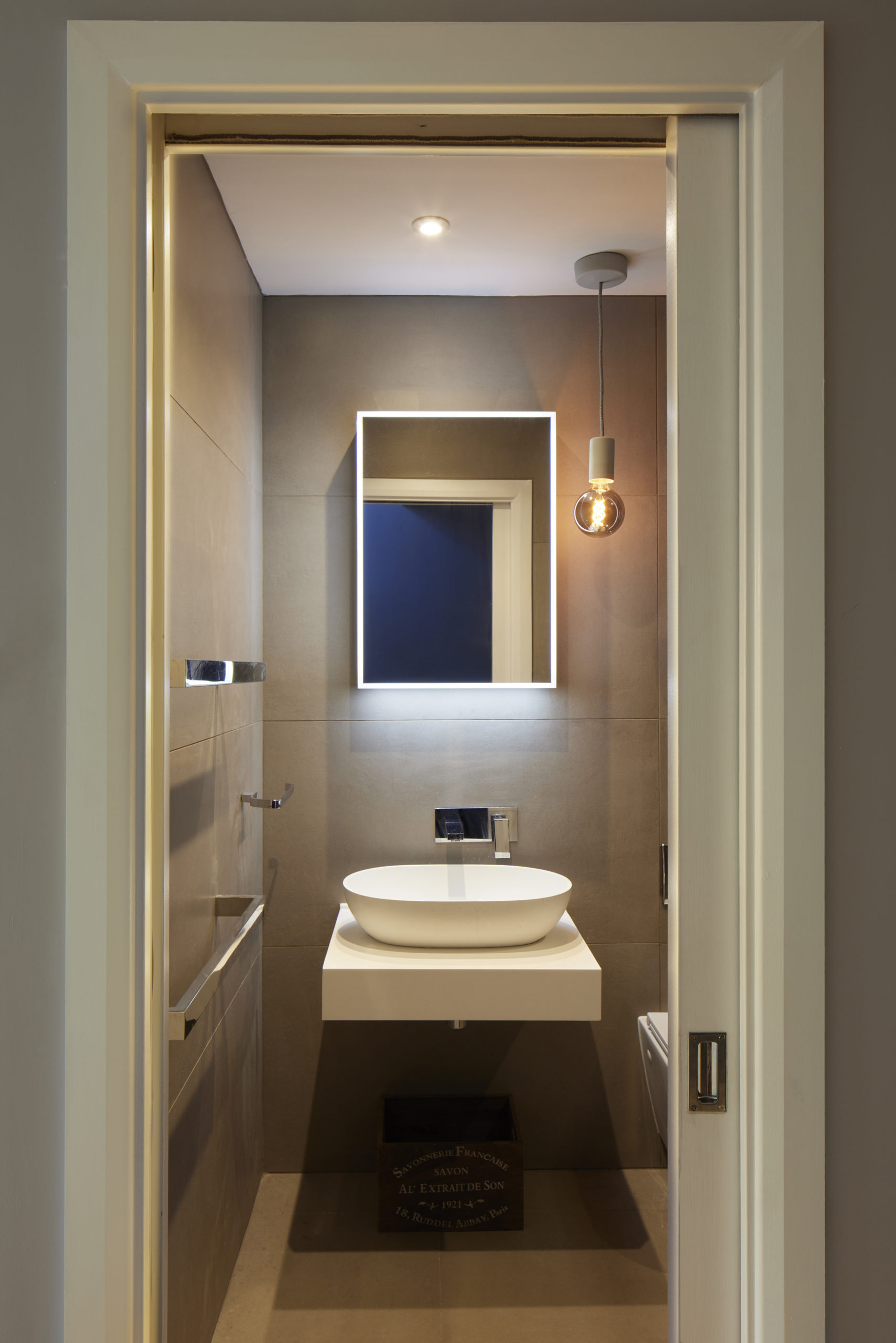
Shape Architecture places strong emphasis on bathroom design, taking care to work through layouts, materiality and detailing at an appropriate level of resolution. Bathrooms are typically developed through 1:20 and 1:25 plans, elevations, and sections, clearly illustrating build ups, junctions and how elements are assembled.
Sanitaryware is considered as part of the overall design rather than as an afterthought, with advice provided on suitability, proportion, and long-term performance to ensure each bathroom responds properly to both the project and the client.
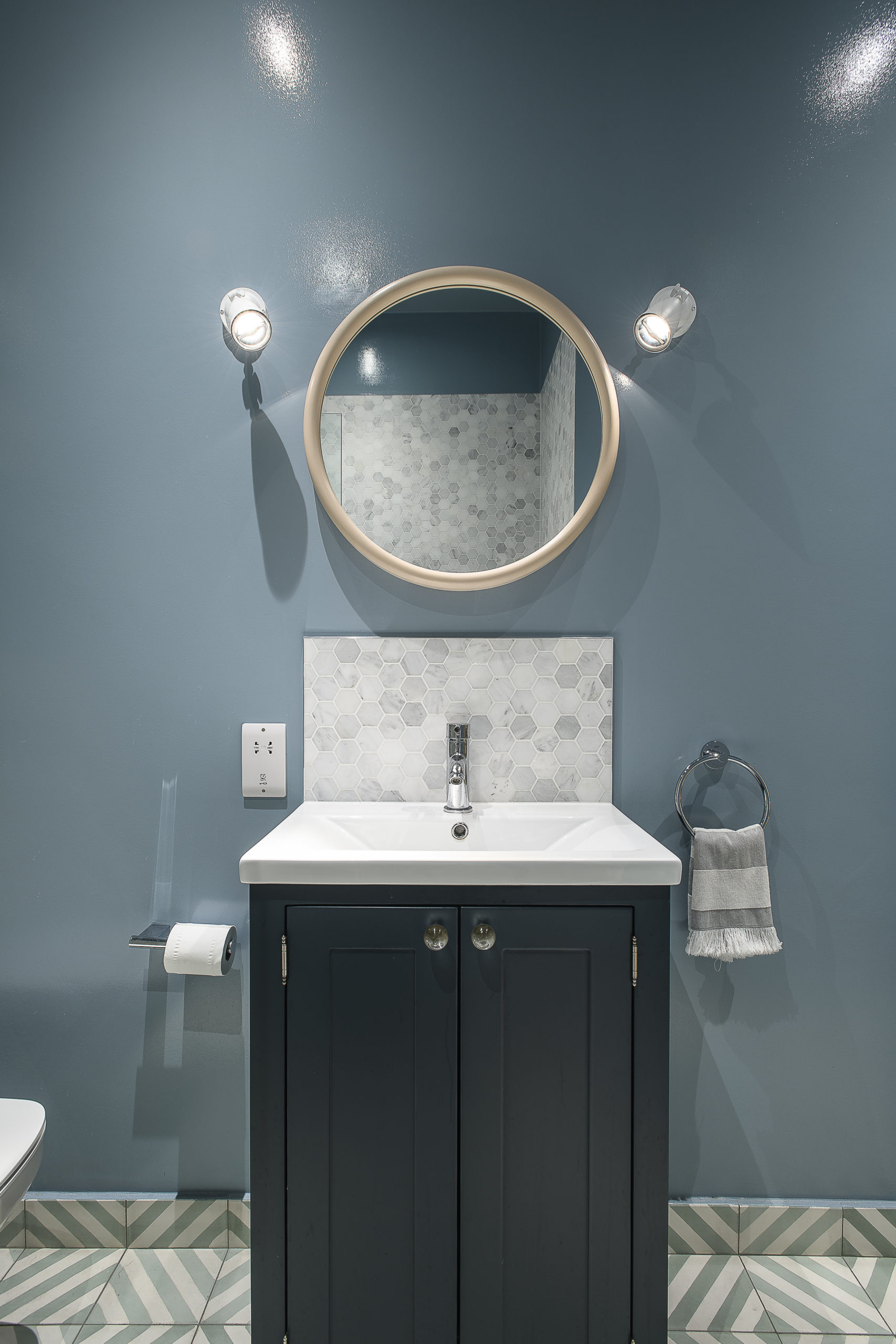
Across our work, bathroom design is not driven by fittings or trends, but by layout, section, sequencing, and long-term use.
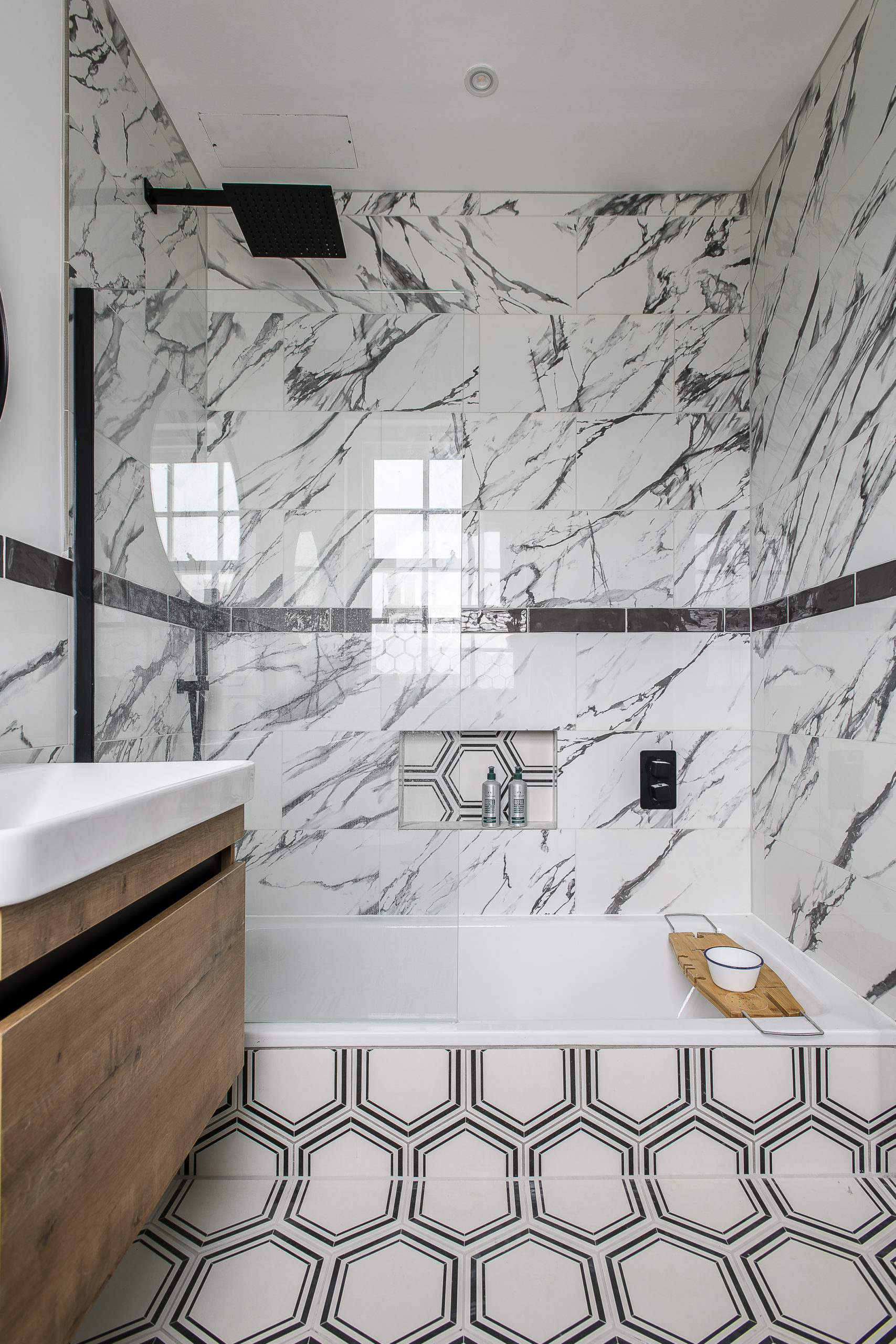
St. Maur Road has a modern principal en suite formed as part of a Victorian house refurbishment, designed with a deliberately minimal approach. Full floor to ceiling tiling creates a single, unified volume, removing visual clutter and avoiding unnecessary changes in material or detail. The space reads as calm, ordered and intentional.
The his and hers vanity is set in contrast to the continuous tiling, becoming a controlled focal point within an otherwise restrained palette.
Lighting is simple but carefully layered. General downlighting provides functional illumination, while PIR activated low level floor washers deliver soft, indirect light in the evening, allowing movement through the space without flooding it with brightness. Uplighting is incorporated to add depth and flexibility, supporting different modes of use throughout the day and night.
The result is a calm, controlled bathroom that works reliably on a daily basis and is designed to age well, both visually and technically.
The project was delivered working with supplier European Heritage in Fulham, whose experience in high quality residential construction supported the execution of a refined, minimal interior within a historic building. A neutral colour palette was used throughout, with subtle variation in texture to add depth and interest while maintaining overall uniformity and clarity of design.
At Westbourne Park Villas, the bathroom forms part of a spatial sequence rather than a standalone room. A walk-through wardrobe leads directly into the principal bathroom, which changes how the space is read and used. It feels deliberate, private and composed.
The bathroom itself is large format and architectural. The bath is positioned in the window as part of the room’s geometry and relationship to daylight, not as the main focal point. A retained chimney breast anchors the space and itself turns into another feature; it maintains a connection to the building’s fabric, giving the room weight and permanence. The space is calming. This is a bathroom designed in section and proportion. The retained and new elements are balanced carefully so the space feels resolved rather than styled; It belongs to the house.
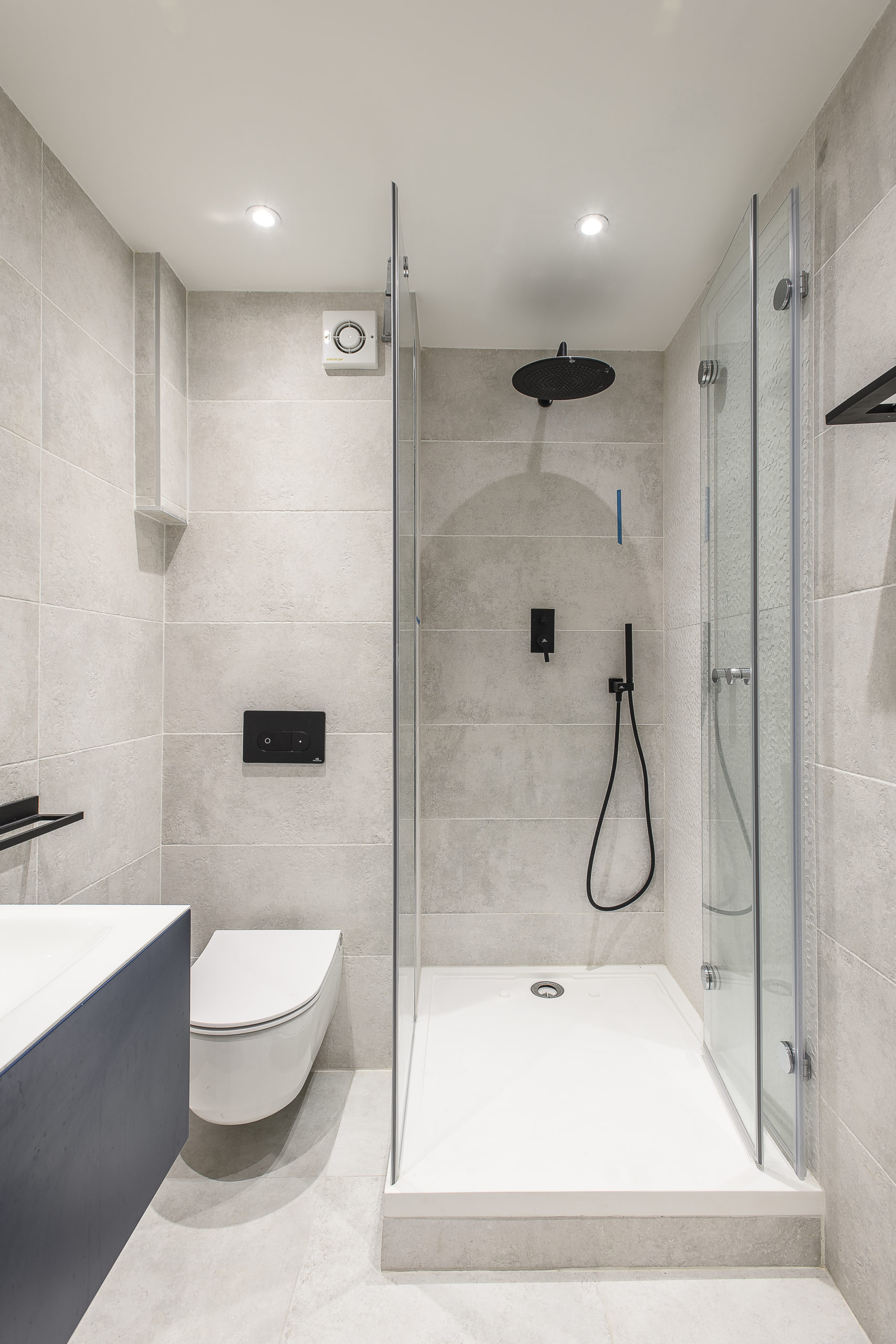
With the Elms Road project, the client wanted something bold. The bathroom design represents a more assertive direction. The project is a complete internal modern upgrade, and the bathroom design reflects that ambition. In the bathroom, large format tiling is used deliberately to create a bold, confident interiors. The scale of the tiles reduces visual fragmentation and gives the room a sense of solidity. Basins are clad in stone to give them physical presence and weight, moving away from lightweight sanitaryware and towards something more architectural. These are bathrooms that are intentionally strong in material language. It is modern, precise, and unapologetically contemporary.
Contact Shape Architecture
If you have a small project you would like to discuss please feel free to contact us at Shape Architecture.